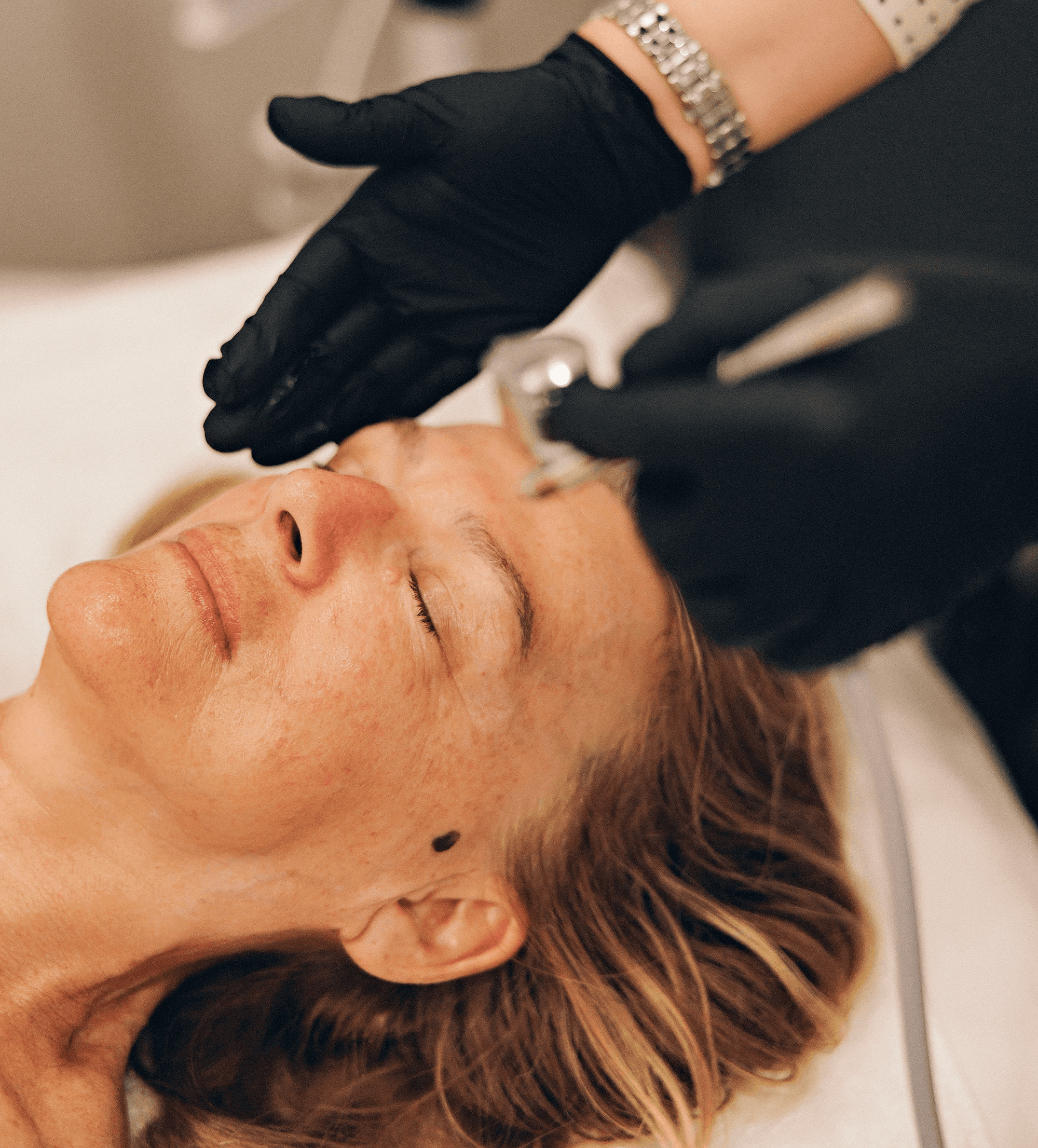
Is aging a skin condition?
Is aging a skin condition?
Aging is not a skin condition. It is a natural biological process.
Yet somewhere along the way, the beauty industry began talking about aging as though it were something that needed to be corrected, reversed, or even cured.
Wrinkles became a “problem.”
Fine lines became “damage.”
Changes in firmness became something to fight.
But healthy skin does not necessarily mean young-looking skin.
At M Beauty & Artistry, we believe there is a much healthier and more realistic way to think about aging: understand what is happening to the skin, identify the concerns that can be improved, and support the skin through every stage of life.
So, what actually happens when our skin ages?
Our skin is constantly changing.
As we get older, cellular renewal gradually slows. Collagen and elastin production changes, the skin may retain less moisture, and the distribution of pigment can become less even. Changes also occur in the deeper structures that support the skin.
The result may be fine lines, increased dryness or dehydration, changes in texture, pigmentation, dullness, increased sensitivity or a thinner or more fragile appearance
These changes are part of intrinsic aging (the natural aging process influenced by genetics, hormones and time).
But chronological age is only part of the story.
Your skin doesn't age from time alone
Sun exposure plays an especially important role in visible skin aging. This is known as photoaging.
Years of ultraviolet exposure can contribute to pigmentation changes, rough texture, fine and deeper wrinkles, loss of elasticity and other visible changes.
Lifestyle and environmental factors can influence the appearance and function of our skin as well, including smoking, pollution, nutrition, sleep, stress and our daily skincare habits.
This is why two people of exactly the same age can have very different-looking skin.
Your birth certificate tells us your chronological age.
Your skin tells us its history.
Aging vs. a skin condition
This distinction matters.
Aging itself is not something we diagnose or cure.
However, aging skin can experience conditions and concerns that deserve attention. Persistent dryness, irritation, acne, rosacea, pigmentation changes and suspicious or changing lesions should not simply be dismissed as “getting older.”
Some concerns belong in the treatment room and others belong in a dermatologist's or physician's office.
A good skincare professional should understand the difference.
Should we still use the term “anti-aging”?
Personally, I prefer to think in terms of healthy aging rather than anti-aging.
Why should we be “anti” something every person fortunate enough to live long enough will experience?
The goal of professional skincare does not have to be making a 50-year-old look 25.
Instead, we can ask:
How can we help your skin function and look its best at 30, 40, 50, 60 and beyond?
That changes the entire conversation.
What can professional skincare realistically do?
Professional treatments and a well-designed home routine can help address many of the concerns that accompany aging.
Depending on the individual, this may mean focusing on hydration, supporting the skin barrier, improving the appearance of texture, addressing uneven pigmentation, encouraging a brighter complexion, or using treatments designed to support collagen and overall skin quality.
But there should never be a one-treatment-fits-all approach.
A treatment that is appropriate for one person's skin may not be appropriate for another person's—even when they are the same age.
That is why consultation matters.
Start with your skin, not your age
When someone comes to M Beauty & Artistry, I don't want the first question to be: "How old are you?"
I do want to know how does your skin feel? What changes are you facing or what bothers you.
Then we can build a treatment approach around your skin rather than a number.
Beautiful skin doesn't have an expiration date
A line around the eyes can exist alongside beautifully hydrated skin.
Mature skin can be radiant.
Skin does not need to be perfectly smooth to be healthy.
And growing older does not mean that someone has failed at skincare.
Perhaps the future of skincare should be less about trying to erase age and more about maintaining healthy, resilient, comfortable and radiant skin for as long as possible.
So, is aging a skin condition?
No.
Aging is a normal part of being human.
But understanding how our skin changes with age gives us an opportunity to care for it better and professional skincare can be part of that journey.
Age is not the condition. Your skin's individual needs are what matter.