Chemical Peels & Fitzpatrick Skin Types – What You Need to Know?
Not all skin reacts the same to a chemical peel — and that’s where the Fitzpatrick Skin Type scale comes in. Before performing any peel, a professional consultation is essential to determine your skin type and choose the safest, most effective treatment for you.
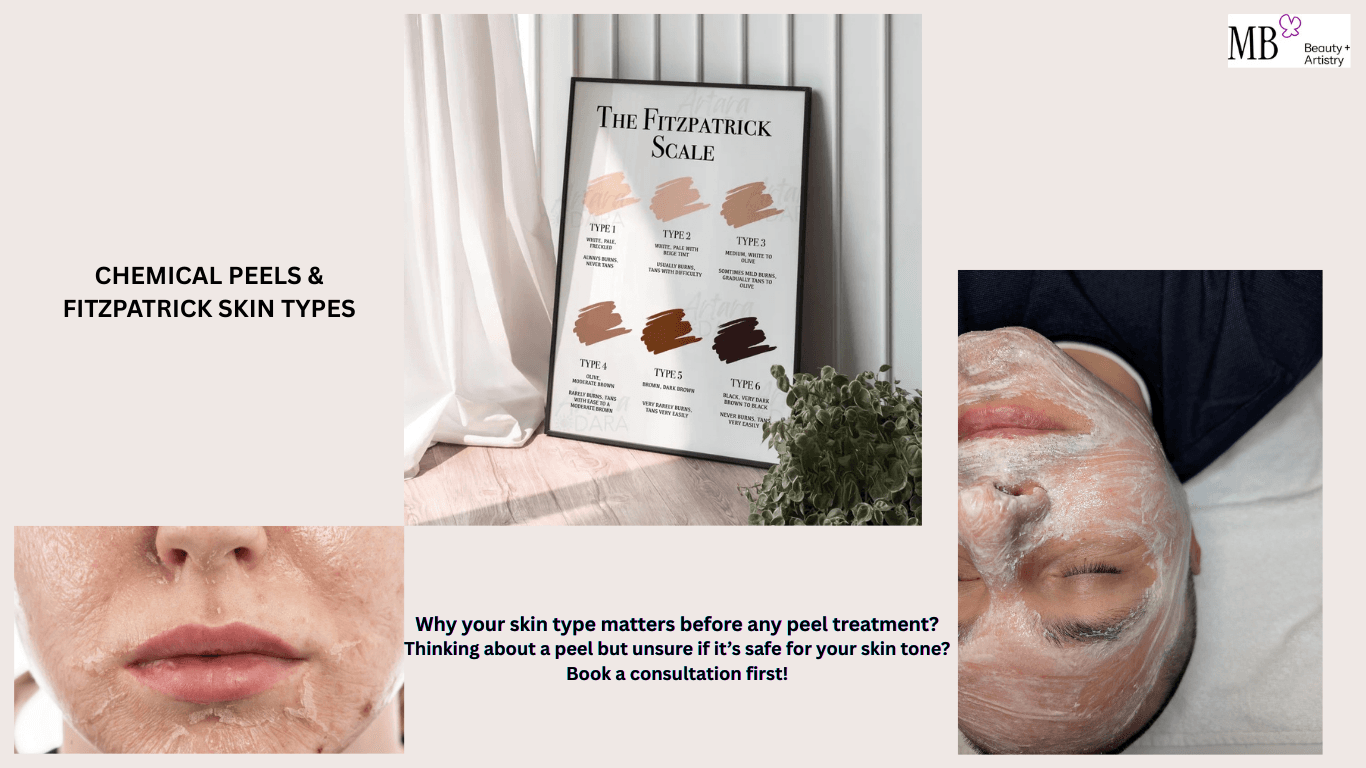
What is the Fitzpatrick Scale? Developed by dermatologist Thomas B. Fitzpatrick, this scale classifies skin into 6 types based on how it reacts to sun exposure.
Fitzpatrick Skin Types:
Type I – Very fair skin, always burns, never tans
Type II – Fair skin, usually burns, tans minimally
Type III – Medium skin, sometimes burns, gradually tans
Type IV – Olive skin, rarely burns, tans easily
Type V – Brown skin, very rarely burns
Type VI – Deeply pigmented skin, almost never burns
Why This Matters for Chemical Peels?
Different skin types carry different risks — especially when it comes to hyperpigmentation, post-inflammatory pigmentation (PIH), sensitivity or healing time.
Lighter Skin Types between type I to III often tolerate medium-depth peels well when properly prepped.
Medium to Deeper Skin Types between type IV to VI require carefully selected acids, controlled strengths, and experienced application to prevent pigmentation changes.
Common Peel Types
• Glycolic Acid (brightening & texture)
• Lactic Acid (hydrating & gentle exfoliation)
• Salicylic Acid (acne & congestion)
• Mandelic Acid (great for sensitive & darker skin tones)
• TCA (for advanced resurfacing – professional use only)
The Key? Customization.
At M Beauty & Artistry, I never perform a “one-size-fits-all” peel. Your skin tone, sensitivity level, concerns, and lifestyle all matter.
A properly selected peel can help with:
Acne
Fine lines
Hyperpigmentation
Dullness
Uneven texture
But the wrong peel (especially without proper assessment) can do more harm than good!